Food Security

Food for the Belly, food for the Soul

We believe that proper nutrition is the cornerstone of a flourishing life—keeping our bellies full, our bodies grounded, and our minds alert. Good, healthy food is a fundamental necessity for all beings to thrive on this planet, supporting our daily activities and nurturing the brain that keeps us alive and vibrant.

We see proper nutrition as more than just sustenance; it is a vital part of human flourishing. That’s why we focus on implementing and supporting sustainable agricultural practices, promoting organic farming, and establishing reliable irrigation systems to ensure nutritious food is accessible and grown responsibly.

Our work begins with planting trees—vital guardians of the soil, these natural giants prevent erosion, enrich the land, and foster biodiversity. Trees are the environmental backbone, helping maintain healthy ecosystems and ensuring that fertile soil and clean air sustain future generations. By nurturing the land from its roots up, we create resilient, thriving communities where people can access nourishing food and reconnect with the earth’s infinite abundance.

Because in the end, we are what we eat—and nourishing the earth means nourishing ourselves and building a healthier, more resilient world for all.
Centered Shape with Circles

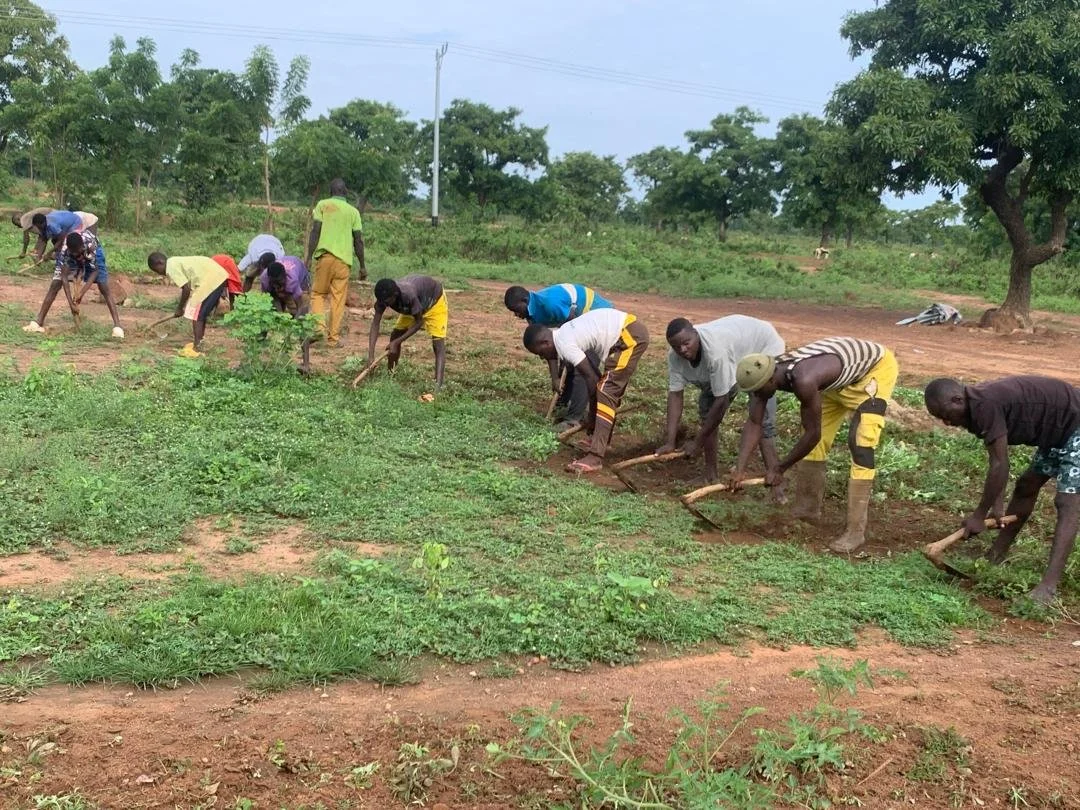
We plant maize by carefully preparing the land, selecting the right seeds, and sowing them at optimal spacing to ensure healthy growth and a reliable food source.

The Sowing

Currently, we tend to 10 acres of land, which serve as vital hubs for our sustainable agricultural initiatives. Each community involved has its own plots of land, carefully selected and under the guidance and permission of local elders and community leaders. These plots are the heart of our food security efforts, and we work directly with the community to determine the best ways to cultivate and harvest crops that will sustain and empower them.

Our main crop is maize, chosen for its resilience, ease of growth, and role as a foundational staple in local diets. Maize not only provides vital nutrients but also acts as a basis for various traditional dishes, making it an essential crop for the community’s well-being. We also utilize tractors to plough the soil, breaking up the ground to create a suitable environment for the maize to grow. We recognize, however, the importance of diversity in food sources, so our long-term aim is to expand our crop base to include a broader variety of grains, legumes, and vegetables—building a resilient food system that can withstand environmental and economic challenges.

Through diligent planning, respect for local customs, and ongoing community engagement, we are committed to creating a sustainable and adaptable farming culture. Every planting season, we gather to sow seeds into well-prepared fields, carefully selecting the right crops for the climate and soil conditions to ensure maximum yield and nutritional value. Our goal is not only to grow food but to nurture a community that is self-sufficient, proud, and connected to the land, forging a future where everyone has access to healthy, nourishing food.

The Planting

Our planting process begins with sourcing young trees that have been nurtured and grown by local farmers, who sell small batches of healthy saplings. These farmers are key partners; by working with them, we promote local economies and ensure that the trees we plant are well-adapted to the environment. We prioritize diversity in our planting efforts, including fruit trees like mango, papaya, and cashews, as well as vital medicinal trees such as moringa and shea. Each type of tree plays a role in enriching the ecosystem, providing food, medicinal benefits, and economic opportunities for the community.

Once we have selected and agreed upon the tree varieties with the local farmers, we begin land preparation. This involves clearing the land with machetes and other manual tools, ensuring the ground is ready for planting. Volunteers and community members work alongside us during this phase to foster a sense of ownership and shared effort in transforming the land.

Planting is a careful, deliberate process; small trees are transplanted into the ready soil, ensuring they are properly spaced to promote healthy growth. After planting, we focus on maintaining the fields by regularly clearing weeds that compete for nutrients and water. We also remain vigilant against threats such as bushfires, which can destroy large parts of the crop if not properly managed. Routine inspections and ongoing care—watering, weeding, and monitoring—are essential to ensure our planting efforts are successful.

By constantly tending to the fields and adjusting our strategies, we aim to create sustainable, thriving groves of trees and crops that will serve communities for years to come, providing vital nourishment, economic opportunity, and ecological balance.

Centered Shape with Circles

We plant trees by selecting healthy saplings from local growers, carefully transplanting them into well-prepared soil.

Centered Shape with Circles

Harvesting crops like maize involves manually cutting, threshing, and drying the grains, which we support through local labor and fair payments.

The Harvest

Harvesting crops is a labor-intensive process, but it is also one of the most rewarding moments in our work—seeing the fruits of our labor and the community’s efforts come to life. To ensure a successful harvest, we hire local community members and invite volunteers to help with this demanding task, sharing the workload and fostering a spirit of teamwork.

Maize, for example, is typically harvested by manually cutting the stalks with machetes or sickles once the grains are mature and dry. The stalks are then gathered, and the kernels are threshed from the cobs, either by beating the cobs against a hard surface or using simple threshing tools. The grains are then cleaned, dried, and stored for future use or sale.

As a token of appreciation, we can choose to compensate our helpers with maize, directly supporting local food needs, or we can use the Foundation’s Bitcoin balance to provide proper, monetary payments for their hard work. This approach ensures that everyone’s efforts are recognized and valued.

Our trees, however, still need time to grow and mature. The fruit and nuts, such as mangoes, cashews, moringa, or shea, will only become available after several years of nurturing and patience. Until then, we remain committed to supporting the community through sustainable farming and careful planning, knowing that the harvest—both immediate and future—brings hope, nourishment, and growth for everyone involved.

I want to join the Movement!

See more?

Spinning Image